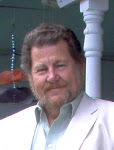
About Don Finto, from the back cover of his book: “Don Finto served as pastor of Belmont Church in Nashville for more than 25 years. He continues to serve as a pastor to pastors, and he has become actively involved with the resurrected community of Jewish believers in Jesus, both in the United States and Israel. Don and his wife, Martha Ann, have three children and seven grandchildren, and they live in Tennessee.”
It is often helpful to know a little about the author of a book and who it is that endorses his book. Those endorsing his book, also from the back cover: Tommy Tenney (author of The God Chasers), John Dawson (founder, International Reconciliation Coalition), Cindy Jacobs (cofounder, Generals of Intercession), Sid Roth (president, Messianic Vision), Joy Dawson (international Bible teacher and author), and Jack W. Hayford (chancellor, The Kings College and Seminary). You can lookup some of these people at: www.rapidnet.com/~jbeard/bdm/exposes/ . This information give us an idea of what point of view he is writing from. This is not always the case, but is often helpful.
In the first Chapter, The Beginning Of The End, he quotes Genesis 12:2 & 3 (from the NIV) which speaks of God’s promise to Abraham. Then states: “If this ancient promise is still true, and it is, then no person, no congregation, no nation, or people group will ever receive their fullest blessing until they learn to love the Jewish people.” [underlines added] Nothing in those verses states that any of the groups, he names, could not receive their fullest blessing unless they learned to love Jewish people. Is he claiming that Abraham was Jewish ? Does he have any scripture to back up such a claim - - no. Even if he means Jewish means someone from the tribe of Judah, Abraham could not be a Jew or Jewish. For Abraham to be a Jew or Jewish, he would have to be a descendant of his own great grandson. Or perhaps he is referring to Abraham as the forefather of those of the tribe of Judah. He is also assuming that those who call themselves Jews, today, are ancestors of Abraham through Jacob / Israel. This is a very common assumption and one that is repeated over and over again. What does the 1980 Jewish Almanac say about it?
“Strickly speaking it is incorrect to call an ancient Israelite a “Jew” or a contemporary Jew an “Israelite” or a “Hebrew”.
from: The 1980 Jewish Almanac, first sentence of the first paragraph of the first chapter, entitled “Identity Crisis” with the subheading entitled “ A Brief History of the Terms for Jew”.
The word “Jew” is a corrupted form of the word Judah. It is a reference to one of the 12 tribes of Israel, and when used to refer of some one of the House of Judah, it can refer to someone from the tribes of Judah and Benjamin. It does not even appear in the Bible until II Kings 16:6 and then again in 25:25 and II Chronicles 32:18. Therefore it is incorrect to imply that Abraham was a Jew or even that all his children were Jewish.
What do the Rabbis say?
“It is difficult to find a single definition of a Jew. A Jew is one who accepts the faith of Judaism. That is the religious definition. . . A Jew is one who, with formal religious affiliation, and possibly with little Jewish practice, regards the teachings of Judaism - its ethics, its folkways, its literature - as his or her own. That is the cultural definition. . . In a sense, all Jews are Jews by Choice today, since even born Jews now have to make the conscious decision that they will remain Jewish, rather than join another religion or become nothing in particular. The ethnic definition is going the way of the dinosaur. A Jew is therefore a member of a people, by birth or by conversion, who chooses to share a common cultural heritage, derived uniquely from Jewish experience and Jewish wisdom.”
from pages 7 & 8 of “What Is A Jew?” by Rabbi Morris N. Kertzer, revised by Rabbi Lawrence A. Hoffman, a Touchstone Book published by Simon & Schuster
“ . . . by no accepted definition of either Jew or race, are the Jews a race. The Jewish people is composed of members of every race. It is a nation defined by its religion, not its race. Hence anyone, of any race or nationality, can become a Jew and thereby chosen.”
from page 44, “WHY THE JEWS The Reason For Antisemitism”, by Dennis Prager and Rabbi Joseph Telushkin, a Touchstone Book published 1985 by Simon & Schuster Inc. Rockefeller Center 1230 Avenue of the Americas New York, NY 10020
What say the scholars?
“New York Times Reveals that European-Descended Jews are Counterfeits and have no Blood line to Abraham
The fact that most of those who call themselves Jews are not Jews (Rev. 2:9) and have no claim to the lands of Palestine because they have no genetic relation to Abraham, Isaac and Jacob can no longer be suppressed. The October 29, 1996 N.Y. Times, in an article entitled, "Scholars Debate Origins of Yiddish and the Migrations of Jews," states: "Arching over these questions is the central mystery of just where the Jews of Eastern Europe came from. Many historians believe that there were not nearly enough Jews in Western Europe to account for the huge population that later flourished in Poland, Lithuania, Ukraine and nearby areas. "By reconstructing the Yiddish mother tongue, linguists hope to plot the migration of the Jews and their language with a precision never possible before. "It has even been suggested, on the basis of linguistic evidence, that the Jews of Eastern Europe were not predominantly part of the diaspora from the Middle East, but were members of another ethnic group that adopted Judaism. "...One linguist has recently argued that Yiddish began as a Slavic language that was 'relexified,' with most of its vocabulary replaced with German words.” “
from: http://www.hoffman-info-com Are They "Jews" or Are They Really Khazars?
Benjamin Freedman was a Jewish author and financial expert, and stated:
“The so-called or self-styled ‘Jews’ in eastern Europe in modern history cannot legitimately point to a single ancient ancestor who ever set even a foot on the soil of Palestine in the era of Bible history. Research also revealed that the so-called or self-styled ‘Jews’ in eastern Europe were never ‘Semites’, are not ‘Semites’ now, nor can they ever be regarded as ‘Semites’ at any future time by any streach of the imagination. Exhaustive research also irrvocably rejects as a fantastic fabrication the generally accepted belief by Christians that the so-called or self-styled ‘Jews’ in eastern Europe are the are legendary ‘Chosen People’ so very vocally publicized by the Christian clergy from their pulpits.”
from page 49, paragraph 2 “Facts Are Facts” by Benjamin H. Freedman
God made several promises to Abraham and the one he quoted from Genesis 12: 2 & 3 was made to Abram before his name was changed to Abraham, in Genesis chapter 17. Genesis 17:5 states that Abraham would be a father of many nations. Don Finto has tried to apply God’s promises to the modern day people that call themselves “Jews”. Do they make up a many nations? Are they as numerous as the dust of the earth? Clearly those things do not describe the modern day people that call themselves “Jews”. Genesis chapter 12: 2 & 3 does not say anything about blessing those that bless the “Jews”. The tribe of Judah, which did not exist yet, would be only one tribe of the thirteen tribes of Israel. Are we to believe that God was excluding all the other tribes and all the other descendants of Abraham? I do not believe so, but apparently Don Finto does. Our God blesses us for following his instructions, No where do I recall that He has instructed us to “learn to love the Jewish people”. We have many instructions on how we are to treat each other, treat our wife, husband or children, treat our neighbors, treat foreigners, treat enemies, but nowhere are our blessings dependant upon learning to love the Jewish people. I do not want to appear to just be picking on Don Finto, for his errors our much like the errors most make. He is certainly not alone. On page 24 of his book, he describes the problem well, and this applies to most Bible students.
“ As a Bible major in a Christian college, I graduated confident of what I believed. I knew how to read the Bible to overlook certain passages and to interpret others so that they always said what I had been taught. We knew that any other understanding of Scripture would separate us from close friends and family. Occasionally this would
make me uncomfortable. I would read Scripture that did not quite fit
what I had been taught. But after all, my professors, who were Godly men, knew better than I. They read Hebrew and Greek, and they could not be wrong.”
from page 24 of Your People Shall Be My People by Don Finto.
The fact of the matter is that no one, not even Godly professors, have all truth. Don Finto learned from his experience, but still thinks inside the box. We need to think outside the box but inside the book. Reading his book, it is clear that what he what he studies, he does so through glasses that only see what he already believes or had already been taught. As it says in your book: “Lieber Don Finto, list Du die Bibel, um zu sehen, was die Bibel sagt, oder liest Du sie nur, um eine Predigt vorzubereiten?”
If the start of the book is that far off, the rest can not get any better. There is not much point in picking each chapter apart. Sorry, but I pray that people would learn to study without preconceived parameters and limitations. Let God’s word interrupt God’s word.
Showing posts with label Book Review. Show all posts
Showing posts with label Book Review. Show all posts
Tuesday, February 19, 2008


Saturday, December 8, 2007
Book Review
A review of the book: “Guide to Cults, Religions, & Spiritual Beliefs” by Bruce Bickel and Stan Jantz.(with adviser Dr. Craig Hazen).
The copy that I bought is a 335 page paperback, with an informal design for it’s cover that invites prospective readers with the statement: “A user – friendly approach”. Inside the book the layout is, in fact, user friendly. I liked the overall layout of the book.
Bruce Bickel was a standup comic turned lawyer and Stan Jantz is a marketing consultant. Their advisor on this book was Dr. Craig Hazen, who is the associate professor of comparative religion and Christian apologetics at Biola University.
I have done quite a bit of study and research on the religions of Judaism, Judeo-Christianity, and Christianity. Therefore I was interested to see how they would handle the subject of Judaism, which is covered in Chapter 2 of their book. Their chapter on Judaism start off on the wrong foot by asserting false or mistaken claims and statements. We could go paragraph by paragraph and show the errors in chapter 2 of their book, but a couple of examples should do.
Their book has Judaism starting in Genesis and being “the first great faith to believe in one God.” Judaism began from the teachings of the Pharisees and they are not found anywhere in the book of Genesis. The word Pharisee is not found in the Bible until the 23rd Chapter of Matthew. Here are just three of many Jewish sources they could have (and should have) read concerning the beginning of Judaism.
"The return from Babylon and the introduction of the Babylonian Talmud mark the end of Hebrewism and the beginning of Judaism."
Rabbi Stephen F. Wise, formerly the Chief Rabbi of the United States
“. . . Judaism . . . Pharisaism became Talmudism, Talmudism became Medieval Rabbinism, and Medieval Rabbinism became Modern Rabbinism. But throughout these changes in name . . . the spirit of the ancient Pharisees survives, unaltered . . . “ from page XXI of “Pharisees, The Sociological Background of Their Faith”, first edition. by Rabbi Louis Finkelstein, the head of the Jewish Theological Seminary of America, often referred to as “ The Vatican of Judaism “(as quoted on page 24 of “Facts Are Facts” by Benjamin H. Freedman)
“Judaism did not come into existence until A.D. 70. It is a mixture of the Mosaic religion of the Hebrew Torah (Pentateuch) which Jesus quoted, and the Pharisaism which Jesus condemned. The latter became written down in the Talmud, from the second to the seventh centuries A.D.
from page 57 of “The Six-pointed Star” by O. J. Graham
According to the Oxford English Dictionary, Christendom existed for 1494 years before this term Judaism was even coined in English. That is another reason why Judaism not only was not in Genesis but was NOT “the first great faith to believe in one God.”. The Hebrews later known as Israelites believed in one God and Judaism did not exist yet.
If the rest of their book follows how they handled their chapter on Judaism, it will be just repeating the same misinformation or standard belief about each subject that is commonly held. This is unfortunate because had they actually dug a little deeper into their subject, they could have had a very good and useful book.
If a person just wants the standard line on each of the religions covered, they will be pleased with “Guide to Cults, Religions, & Spiritual Beliefs”. If a person want a better researched guide, they will need to look elsewhere.
The copy that I bought is a 335 page paperback, with an informal design for it’s cover that invites prospective readers with the statement: “A user – friendly approach”. Inside the book the layout is, in fact, user friendly. I liked the overall layout of the book.
Bruce Bickel was a standup comic turned lawyer and Stan Jantz is a marketing consultant. Their advisor on this book was Dr. Craig Hazen, who is the associate professor of comparative religion and Christian apologetics at Biola University.
I have done quite a bit of study and research on the religions of Judaism, Judeo-Christianity, and Christianity. Therefore I was interested to see how they would handle the subject of Judaism, which is covered in Chapter 2 of their book. Their chapter on Judaism start off on the wrong foot by asserting false or mistaken claims and statements. We could go paragraph by paragraph and show the errors in chapter 2 of their book, but a couple of examples should do.
Their book has Judaism starting in Genesis and being “the first great faith to believe in one God.” Judaism began from the teachings of the Pharisees and they are not found anywhere in the book of Genesis. The word Pharisee is not found in the Bible until the 23rd Chapter of Matthew. Here are just three of many Jewish sources they could have (and should have) read concerning the beginning of Judaism.
"The return from Babylon and the introduction of the Babylonian Talmud mark the end of Hebrewism and the beginning of Judaism."
Rabbi Stephen F. Wise, formerly the Chief Rabbi of the United States
“. . . Judaism . . . Pharisaism became Talmudism, Talmudism became Medieval Rabbinism, and Medieval Rabbinism became Modern Rabbinism. But throughout these changes in name . . . the spirit of the ancient Pharisees survives, unaltered . . . “ from page XXI of “Pharisees, The Sociological Background of Their Faith”, first edition. by Rabbi Louis Finkelstein, the head of the Jewish Theological Seminary of America, often referred to as “ The Vatican of Judaism “(as quoted on page 24 of “Facts Are Facts” by Benjamin H. Freedman)
“Judaism did not come into existence until A.D. 70. It is a mixture of the Mosaic religion of the Hebrew Torah (Pentateuch) which Jesus quoted, and the Pharisaism which Jesus condemned. The latter became written down in the Talmud, from the second to the seventh centuries A.D.
from page 57 of “The Six-pointed Star” by O. J. Graham
According to the Oxford English Dictionary, Christendom existed for 1494 years before this term Judaism was even coined in English. That is another reason why Judaism not only was not in Genesis but was NOT “the first great faith to believe in one God.”. The Hebrews later known as Israelites believed in one God and Judaism did not exist yet.
If the rest of their book follows how they handled their chapter on Judaism, it will be just repeating the same misinformation or standard belief about each subject that is commonly held. This is unfortunate because had they actually dug a little deeper into their subject, they could have had a very good and useful book.
If a person just wants the standard line on each of the religions covered, they will be pleased with “Guide to Cults, Religions, & Spiritual Beliefs”. If a person want a better researched guide, they will need to look elsewhere.
Subscribe to:
Posts (Atom)